
Construction Staking Survey for Utility Lines Serving a New Commercial Pad
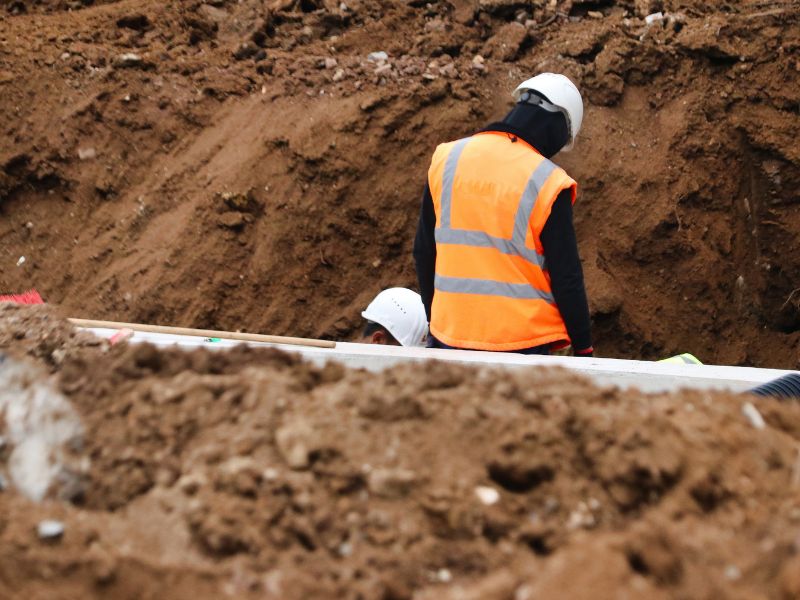
A sewer line laid just a few tenths of a foot too flat can cause slow drains for years. A water service set a few feet off can land under a future curb or clash with a storm pipe. On a commercial pad, those small errors turn into dig-ups, change orders, and inspection delays.
A construction staking survey keeps underground work tied to the approved plans. The surveyor marks where each line goes and how deep it should sit before crews start digging. Contractors and developers who plan staking early tend to have cleaner installs, fewer surprises, and faster sign-offs.
Why Utility Construction Staking Matters Before Commercial Pad Development
A commercial pad is a prepared building site, often an outparcel or lot within a larger development. It needs water, sewer, and storm drainage connected before the building can open. Those lines usually tie into mains or structures that were built earlier, so the new work has to meet them at the right spot and elevation.
For the utilities, means setting stakes that show line locations, structure positions, and the cut or fill needed to reach design grade. Crews then dig and lay pipe based on those marks.
Underground work is hard to fix once it’s buried. A missed grade on gravity sewer or storm pipe can affect flow for the life of the site. Getting the layout right the first time costs far less than correcting it after paving.
Reviewing Utility Plans and Survey Control Before Field Layout
Good staking starts in the office. The surveyor reviews the approved civil plans, including utility plan and profile sheets, details, and any city or utility provider comments. They look for missing dimensions, conflicting elevations, and crossings where two lines may be too close.
Checking Survey Control
Survey control is the set of known points and benchmarks used to measure everything else on the site. A benchmark is a point with a known elevation. The crew checks that existing control still matches the plans before setting any utility stakes.
This catches problems early. If a manhole rim or existing main sits at a different elevation than the plans show, the engineer needs to know before pipe goes in the ground. Ask your surveyor to report any conflicts in writing so the design team can respond quickly.
Staking Water, Sewer, and Storm Drainage Line Alignments
With plans and control confirmed, the crew sets stakes for each utility. Stakes are often placed on an offset, a set distance to one side of the line, so they don’t get knocked out when the trench is dug. Each stake is marked with the offset distance and the cut or fill to the design elevation.
Typical items staked on a commercial pad include:
- Water service lines, meters, valves, and fire hydrants
- Fire lines and backflow device locations
- Sanitary sewer lines, manholes, and cleanouts
- Storm drain pipes, inlets, junction boxes, and outfalls
- Utility stub-outs at the building pad for future connections
Gravity lines get the most attention. Sanitary sewer and storm drain depend on steady slope, so stakes show the flow line elevation at each structure and along the run. Pressure lines like water have more flexibility on grade, but location and cover depth still matter.
Coordinate the staking order with your contractor’s schedule. Crews often install the deepest lines first, which is usually sanitary sewer. Requesting stakes a few days before each phase helps avoid idle equipment.
Verifying Utility Grades and Connections During Installation
Stakes set the target, but checks during installation confirm the work hit it. Many contractors use laser levels in the trench and ask the surveyor to spot-check key points. Common checkpoints include structure inverts, pipe slopes between manholes, and tie-ins to existing mains.
An invert is the elevation of the bottom inside of a pipe where it enters or leaves a structure. If an invert is off, the slope of the whole run may be off too. Checking before backfill lets the crew fix it while the trench is still open.
Inspection requirements vary by municipality, utility provider, and project scope. Some agencies want to see grade checks or inspections before pipe is covered. Confirm those requirements before work starts so your survey visits line up with inspection dates.
How As-Built Surveys Document Completed Utility Installations
An as-built survey records where the utilities actually ended up after construction. The surveyor measures the final locations and elevations of structures, valves, cleanouts, and other visible features. Those measurements are compared with the design and shown on a drawing.
Many cities and utility providers require as-built or record drawings before they accept new lines. Lenders and owners may want them too. Even when not required, they give the property a reliable record for future repairs, expansions, or tenant changes.
Plan for the as-built before construction ends. Some features are easier to measure while trenches are open or before final paving. Talk with your surveyor about what the reviewing agency expects so nothing has to be dug back up.
Frequently Asked Questions
Why is construction staking important when installing utilities for a new commercial pad?
A construction staking survey puts the approved utility design on the ground. It shows crews where to dig and how deep each line should sit. That helps gravity lines keep proper slope and connect at the right elevations. It also lowers the risk of costly dig-ups after paving.
What utility lines can a construction staking survey help position?
It can position water lines, fire lines, sanitary sewer, and storm drainage pipes. Structures like manholes, inlets, valves, hydrants, and cleanouts are staked as well. Stub-outs at the building pad can be marked for later connections. The exact list depends on the approved plans and project scope.
How do surveyors establish utility alignments and elevations before excavation?
Surveyors start by reviewing the plans and checking site control and benchmarks. They then set offset stakes along each line and at each structure. Each stake shows the distance to the line and the cut or fill to design grade. Crews use those marks to dig and set pipe accurately.
When should utility staking be checked during commercial site construction?
Checks are most useful before backfill, while the trench is still open. Key points include structure inverts, pipe slopes, and tie-ins to existing mains. Some agencies also require inspections at certain stages. Confirm those steps early so survey visits match the schedule.
Is an as-built survey necessary after underground utility installation?
Many cities and utility providers require as-built or record drawings before accepting new lines. Requirements vary by jurisdiction, utility provider, and project. Even when not required, the record helps with future repairs and expansions. Ask your engineer what the reviewing agency expects before construction wraps up.
